
Q: What is the best business to start with little money?
There is a slightly misleading assumption behind this question: that there must be one particular business that is best for everyone who has very little money. There is not. A better question is what can you sell without having to spend heavily before you have your first customer.
That immediately makes some businesses more attractive than others. A person with a van might be able to start a gardening, cleaning or property maintenance service with relatively modest spending. Someone with useful computer skills could offer web design, bookkeeping, tutoring, graphic design, photography, copywriting or another service from home. If you already own the equipment or have the skill, your starting cost can be dramatically lower.
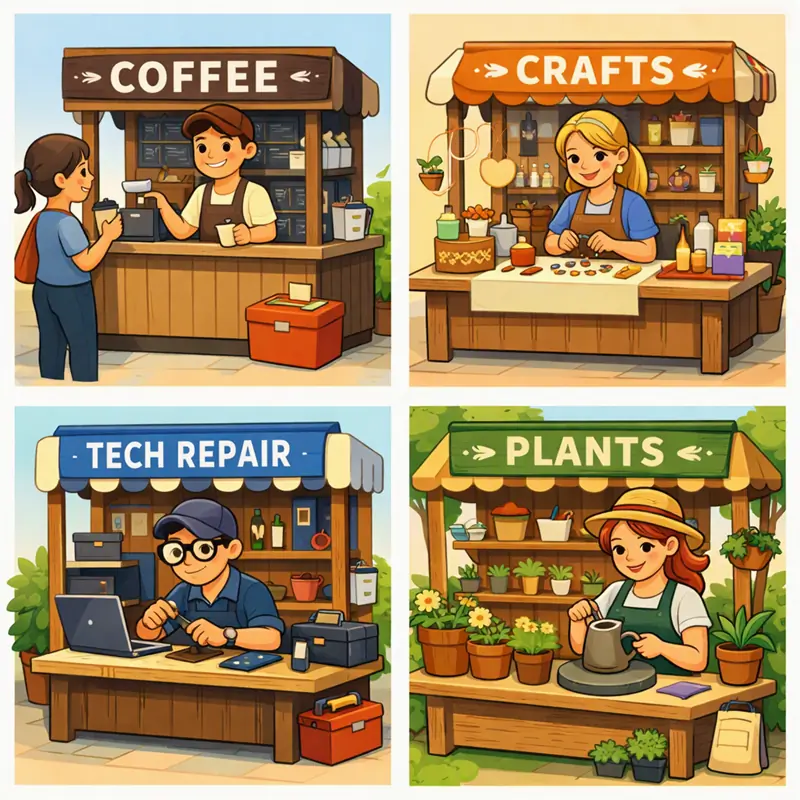
The same principle applies online. Selling digital services, teaching a skill, creating specialist content or providing administrative support can avoid many of the costs associated with buying stock and renting premises. The government-backed Business.gov.uk guide to starting a business recommends testing whether an idea can actually make money and considering how much time and money you can commit before taking the plunge.
Start with what you already have
This is where I think the usual lists of "50 businesses you can start for £100" become less useful. They make starting a business sound like choosing an item from a catalogue. Your existing skills, contacts, location and equipment may be worth considerably more than £100.
Imagine someone who is already good at repairing bicycles. They might spend a relatively small amount on tools, parts and advertising and start by collecting and returning customers' bikes. Someone else might have no practical trade but years of experience in an office. They could potentially turn that knowledge into virtual administration, bookkeeping or specialist freelance work. The business ideas are completely different, but the underlying advantage is the same: they are not starting from zero.
"The secret of getting ahead is getting started." - Mark Twain
There is also a useful distinction between a cheap business and a business that can make money. Buying £500 of stock for an online shop may technically be affordable, but it leaves you carrying the risk that nobody wants the products. Spending £50 on a simple website and finding three customers for a service can be a much cheaper experiment.
So if money is tight, I would start by listing three things you are already good at, three problems people regularly ask you to solve and three groups of people you could realistically reach. Look for an overlap. That is more likely to produce a workable low-cost business than picking an idea simply because somebody online says it is cheap to start.

Next Articles





This article was last updated on 2026-07-19. Please see our terms of use. You can find other articles about low cost business ideas using the search function.