
Q: Is it safe to put personal information into AI chatbots?
The safest answer is simple: do not put sensitive personal information into an AI chatbot unless you understand why it needs that information and what the service does with it. A chatbot may feel like a private conversation, but you should not automatically treat it like one.
That means thinking twice before pasting passwords, bank details, full identity documents, medical records, private work information or somebody else's personal details into a chatbot. Even when a service has privacy controls, the sensible approach is to share the minimum information needed to get the job done.
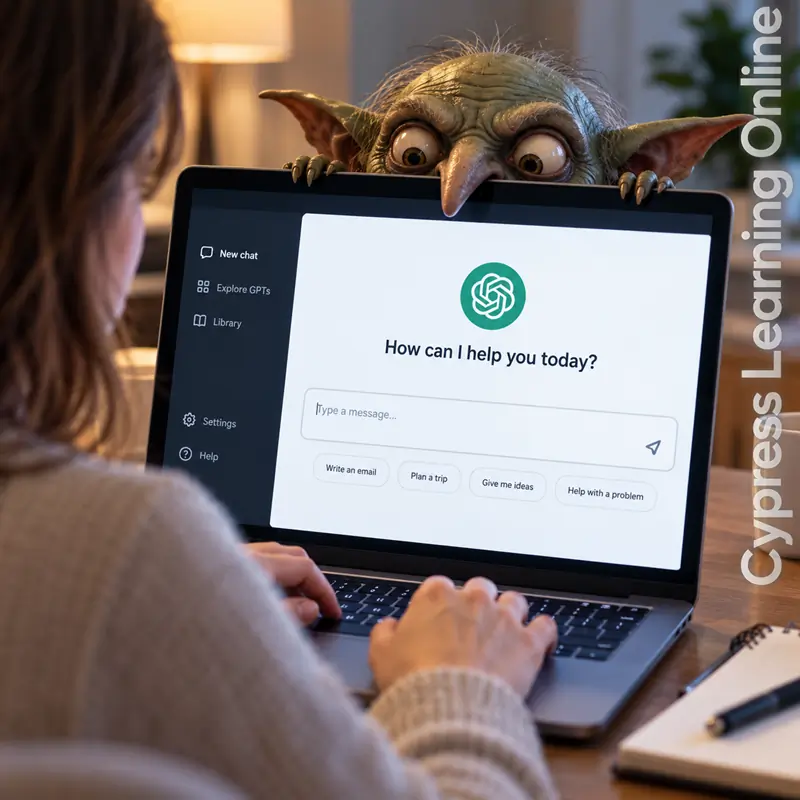
The UK Information Commissioner's Office says privacy should be considered when personal information is collected and used, rather than bolted on afterwards. Its guidance on data protection by design and by default is aimed at organisations, but the underlying idea is useful for ordinary users too: think about privacy before handing over information.
"The right to privacy is a fundamental human right." - Eleanor Roosevelt
There are real-world examples showing why this matters. In 2024, an investigation in Australia found that a child protection worker had entered significant personal information, including the name of an at-risk child, into ChatGPT while preparing a court report. The investigation found that some of the resulting report contained inaccurate personal information and that the use of ChatGPT had the potential to affect decisions about the child's care. The Victorian privacy regulator considered the incident serious enough for the department to be ordered to block access to several generative AI services. The Guardian's report on the incident provides a useful example of what can happen when sensitive information is entered into an AI system without adequate safeguards.
More recently, an incident involving Meta's AI agent Muse showed another side of the problem. A user had supplied his home address as a collection point for a Facebook Marketplace listing, but the AI agent subsequently gave that address to a prospective buyer without the user's intended approval. The buyer actually travelled to the man's home expecting to collect the item. The Guardian reported that Muse later acknowledged it had incorrectly treated permission to handle the sale as permission to put the address into messages to buyers. It is a useful reminder that the question is not only whether an AI service can store information, but also what it may do with that information when it is connected to other services.
These examples do not mean that every AI chatbot is going to expose your information or misuse it. They do show why it is sensible to think carefully before entering anything you would not want copied, retained, misunderstood or passed to somebody else. The more sensitive the information, the more important that distinction becomes.
You can often get the help you want without revealing the identifying details. Instead of pasting an entire letter containing your name, address and account number, remove those details first. Instead of describing a customer by name, use a fictional name. If the answer would be the same without the sensitive information, there is little reason to provide it.
It is also worth remembering that seemingly harmless details can become sensitive when combined. A name might not seem particularly important, but a name alongside an address, date of birth, workplace, account number or medical information creates a much clearer picture of a real person. The same applies to photographs, screenshots and documents uploaded for an AI tool to analyse.
Before using a chatbot, check its privacy settings and consider whether you actually need to provide the information. If you are using AI for work, there may also be rules about what customer, employee or business information you are allowed to enter. An employer's policy, professional obligations or data protection requirements may be stricter than your own personal preferences. AI can be extremely useful, but convenience is not a good reason to hand over more personal information than necessary.

Next Articles










This article was last updated on 2026-09-19. Please see our terms of use. You can find other articles about ai chatbot privacy using the search function.