
Q: What can AI actually do for me in everyday life?
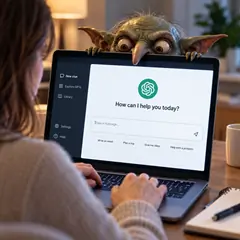
For all the talk about artificial intelligence changing the world, it is quite reasonable to ask what it can actually do for you on a Tuesday evening. You do not need to be a programmer or run a business to find useful applications. In fact, some of the most practical uses are surprisingly ordinary.
AI can be useful when you have a starting point but do not quite know what to do with it. Give it a messy list of things you need to get done and it can turn that into a sensible order. Give it a recipe and a list of ingredients you already have and it can suggest what to cook. Give it a complicated letter and it can explain what the writer is actually asking you to do in plain English.

It can also save time on writing. You might use it to draft an email, rewrite something that sounds awkward, create questions for a quiz, turn notes into a checklist or suggest different ways of explaining something. You still need to read what it produces, but getting from a blank page to a workable first draft can be much easier.
It can be useful without being clever enough to trust blindly
Learning is another strong use. You can ask an AI system to explain a subject at a beginner level, then ask it to explain the same thing using an everyday example, and then ask questions about the bits you still do not understand. That makes it rather different from simply searching for a page and reading whatever happens to appear first.
Government research gives some idea of how people are already using these tools. The latest DSIT public engagement survey found that the most common use of generative AI was writing or editing documents, followed by work purposes and creating or editing images, video or sound. People also reported using AI for learning, the home, hobbies, health and wellbeing, and personal finances.
That last group is where a little caution becomes important. AI can help you understand a financial term, organise information or generate questions to ask a professional, but that does not make it a financial adviser. The same applies to medical, legal and other high-stakes questions. AI can produce a confident answer that happens to be wrong.
"The measure of intelligence is the ability to change." - Albert Einstein
There are simpler uses too. You can ask it to create a packing list for a trip, compare two products using information you provide, turn a long meeting note into action points, suggest activities for children on a rainy afternoon, help you practise another language or create a weekly meal plan around a budget. The useful trick is to tell it what you are actually trying to achieve rather than simply asking for information.
Perhaps the most useful way to think about AI is as an assistant that is very quick but not necessarily reliable. Let it handle some of the boring first steps, ideas and organisation, then use your own judgement for anything important. That makes it much more useful than either treating it as magic or dismissing it as something only technology enthusiasts need to understand.

Next Articles







This article was last updated on 2026-09-17. Please see our terms of use. You can find other articles about everyday uses of ai using the search function.