
Q: How can I improve my credit score?
A credit score can feel rather mysterious. You are given a number, it changes from month to month, and then a lender may use information from your credit history to decide whether to offer you borrowing. It is easy to think that the answer is simply to find a way to make the number bigger. In practice, improving your credit profile is much more about showing that you manage borrowing reliably.
The first useful step is to look at your credit reports rather than guessing what is holding you back. Check that your address, accounts and payment history are correct. An old account that should have been closed, an incorrect missed payment or a mistake in your personal details can create unnecessary problems.
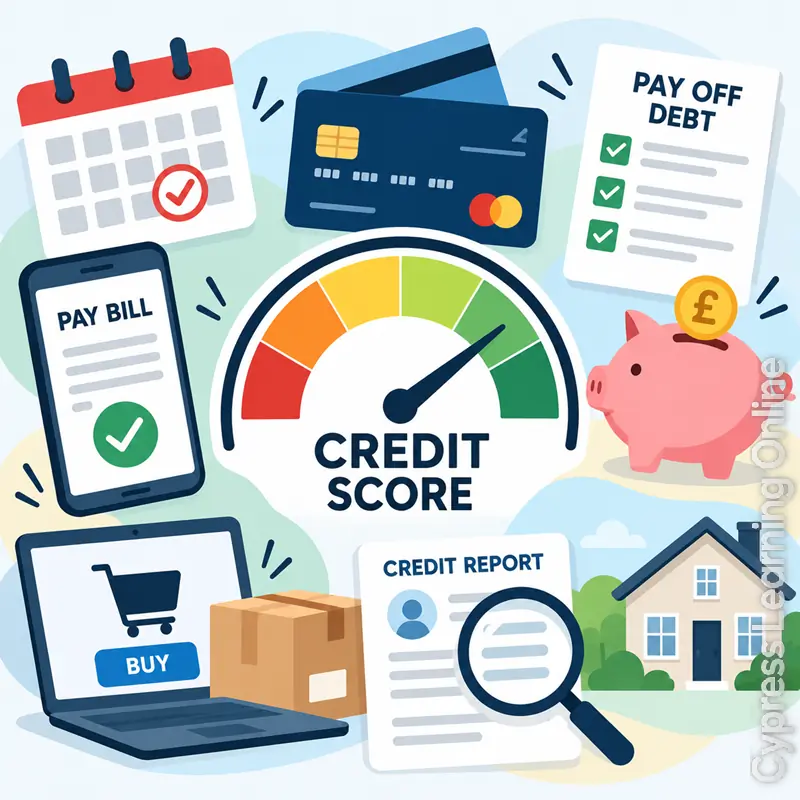
Experian lists several practical ways to improve a credit score, including registering on the electoral roll, paying accounts on time, building a credit history and keeping credit utilisation relatively low. These are not overnight tricks. They are habits that gradually give lenders more evidence about how you handle credit.
Small changes can be more useful than chasing the number
Credit utilisation is worth understanding because it is often overlooked. If you have a £2,000 credit limit and a £1,000 balance, you are using 50% of the available credit. Reducing the balance lowers that percentage. Experian suggests that keeping utilisation below 25% can help protect your score, although there is no magic percentage that guarantees approval.
Payment history is even more important in practical terms. Set up Direct Debits where appropriate so that an ordinary missed payment does not damage an otherwise good record. If you have debts, focus on getting accounts back under control rather than taking out new borrowing simply because somebody says having more credit will improve your score.
"A penny saved is a penny earned." - Benjamin Franklin
Be careful with applications too. Making lots of credit applications in a short period can leave several hard searches on your report, and that can make you look more reliant on borrowing. If you are shopping around, use eligibility checkers or soft searches where available instead of submitting applications everywhere and hoping one gets accepted.
There is another point that is easy to miss: a high credit score does not guarantee that a lender will say yes. Lenders have their own criteria and may consider your income, existing commitments, affordability and other information as well. So the goal is not to obsess over reaching a particular number. It is to make your credit record as accurate, stable and well-managed as you reasonably can.

Next Articles










This article was last updated on 2026-07-18. Please see our terms of use. You can find other articles about ways to improve credit using the search function.