
Q: How can I improve my gut health naturally?
Gut health has become one of those subjects where it is very easy to feel that you need a cupboard full of specialist powders, drinks and supplements before you are doing anything properly. The reality is considerably less glamorous. For most people, improving the way their digestive system is supported starts with ordinary food and a few consistent habits.
Fibre is one of the best places to start. Wholegrains, oats, beans, lentils, fruit, vegetables, nuts and seeds all provide it, and increasing the variety of these foods gives your digestive system more to work with. The UKRI reported in September 2026 that only around 4% of adults achieve the recommended 30 grams of fibre a day, while explaining how the gut microbiome helps us digest carbohydrates including fibre. You can read the UKRI article about current gut microbiome research for more detail.
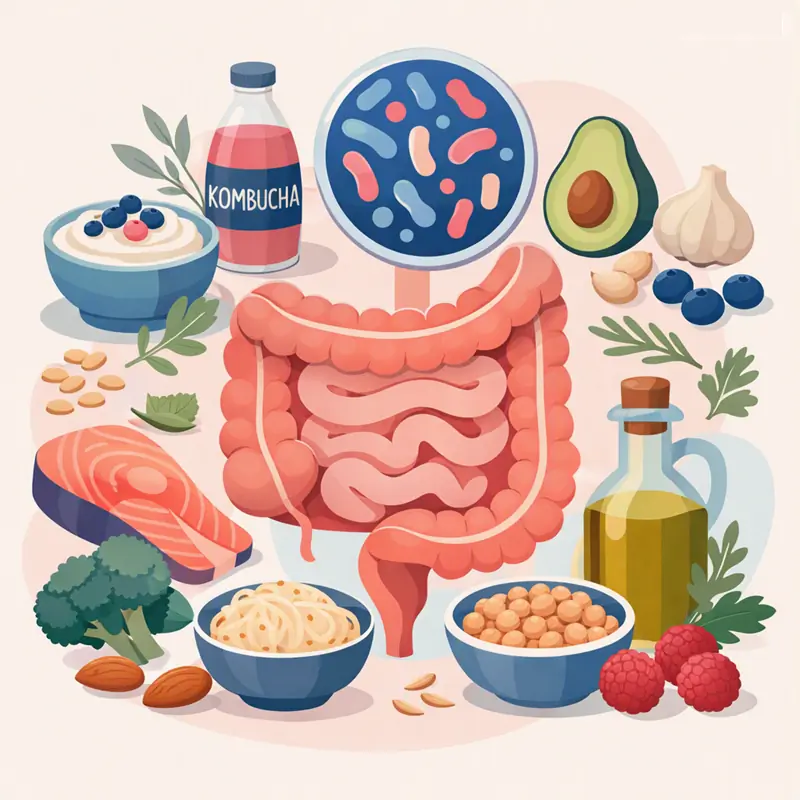
That does not mean you should suddenly double your fibre intake tomorrow. A rapid increase can leave some people feeling bloated and uncomfortable. Adding an extra portion of vegetables, swapping white bread for wholemeal, choosing oats at breakfast or putting beans into a meal a couple of times a week is a much more manageable approach.
Think variety rather than a miracle food
Fermented foods are another area that gets a lot of attention. Live yoghurt, kefir and some fermented vegetables can be useful additions to a varied diet, but there is no single food that magically fixes your gut. The same goes for probiotic supplements: they may be useful in particular circumstances, but buying an expensive product simply because the label says "gut health" is not automatically money well spent.
Fluids matter as well. Fibre needs water to do its job properly, so eating more roughage while barely drinking anything can produce the opposite of the comfortable digestion you were hoping for. Regular movement can help too, as can paying attention to foods that repeatedly cause you discomfort.
"Tell me what you eat, and I will tell you what you are." - Jean Anthelme Brillat-Savarin
One useful trick is to stop looking for a perfect gut-health diet and look at what you actually eat across a normal week. If the same few foods appear at nearly every meal, introduce some variety. If vegetables are rare, add them gradually. If most of your carbohydrates are highly refined, try replacing some with wholegrain alternatives. These are much less exciting changes than the latest wellness trend, but they are easier to maintain.
If you have persistent diarrhoea, constipation, unexplained weight loss, blood in your stools, severe abdominal pain or a major change in bowel habits, do not assume it is simply an unhealthy gut. Those symptoms deserve proper medical advice. Improving everyday digestion is one thing; trying to explain away a continuing health problem with a supplement is quite another.

Next Articles









This article was last updated on 2026-07-14. Please see our terms of use. You can find other articles about healthy gut foods using the search function.